
😺 About Me
Hi, I’m Qi Pang, an incoming Ph.D. student at the School of Artificial Intelligence and Data Science (AIDS), University of Science and Technology of China (USTC), where I work with the Computational Interpretation Group (CIG) and am fortunate to be supervised by Prof. Xinming Wu. Before that, I received my Master’s degree from Xi’an Jiaotong University under the supervision of Prof. Jinghuai Gao, and my Bachelor’s degree from Shenyang Aerospace University.
My research interests include inverse problems, generative modeling, and geological modeling, with a particular focus on developing physics-informed generative models for geoscience.
🔍 Topics I’m Excited About
-
Subsurface geoscience with generative models
(grounded in geophysical principles) -
Geological modeling with realistic priors
(e.g., geostatistical simulation methods) -
Inversion guided by multi-source information
(e.g., physics-informed machine learning)
🌍 Vision
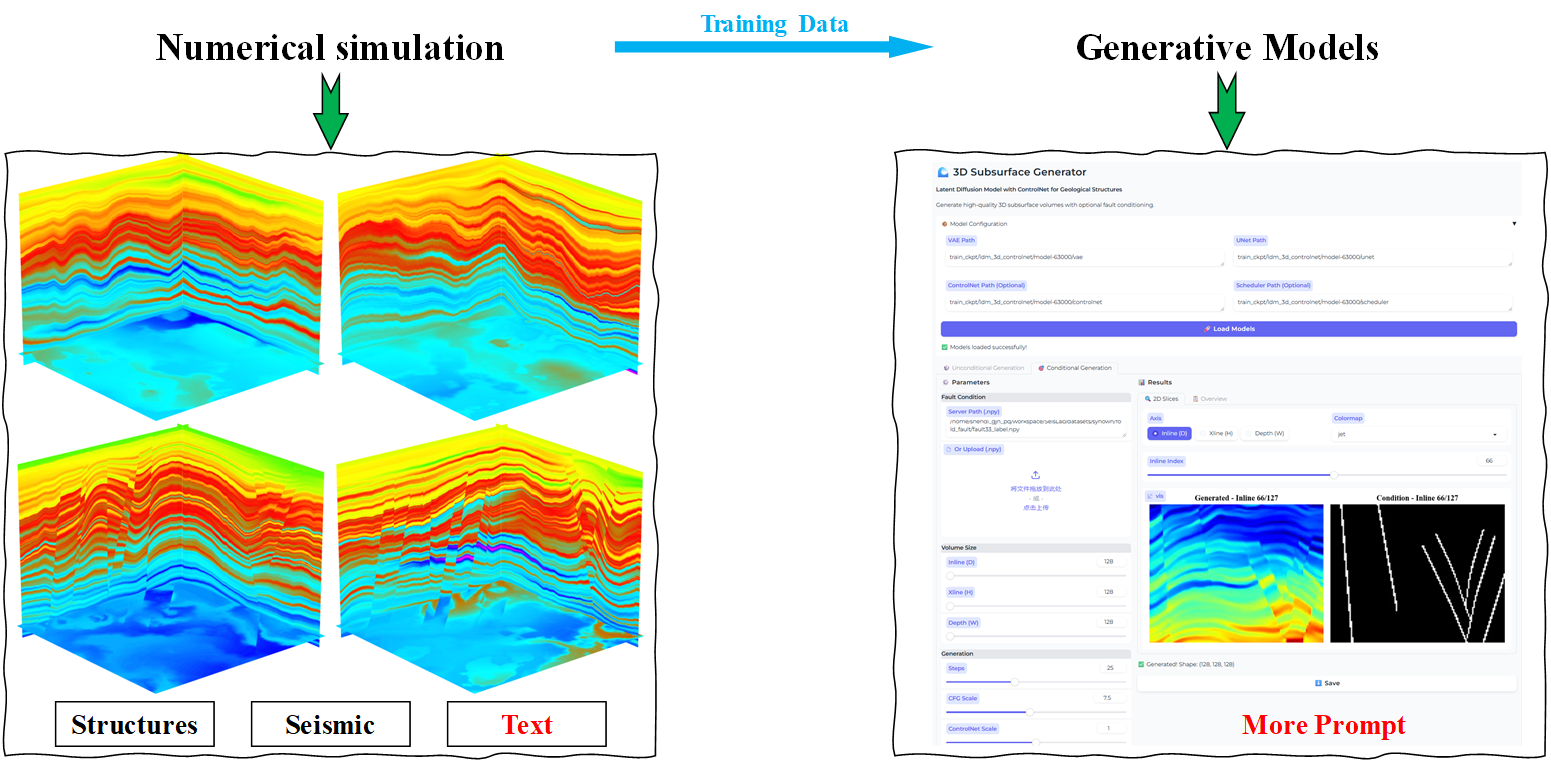
World Model for the Subsurface
My future research aims to build a World Model for Earth Science — a generative framework that deeply understands the subsurface by integrating physics, multi-modal observations, and geological knowledge.
If you’re working on related problems—or think my background could contribute to your group or project—I’d love to connect. Feel free to reach out at: 📧 pangjiutian@gmail.com
📝 Publications
Current Research Topics: Generative Models/Geological Modeling
High-quality training data is essential in modern geophysics, yet sensitive data and the lack of open datasets remain major challenges. My research bridges numerical simulation and generative AI to create diverse, realistic subsurface datasets for geophysical applications.
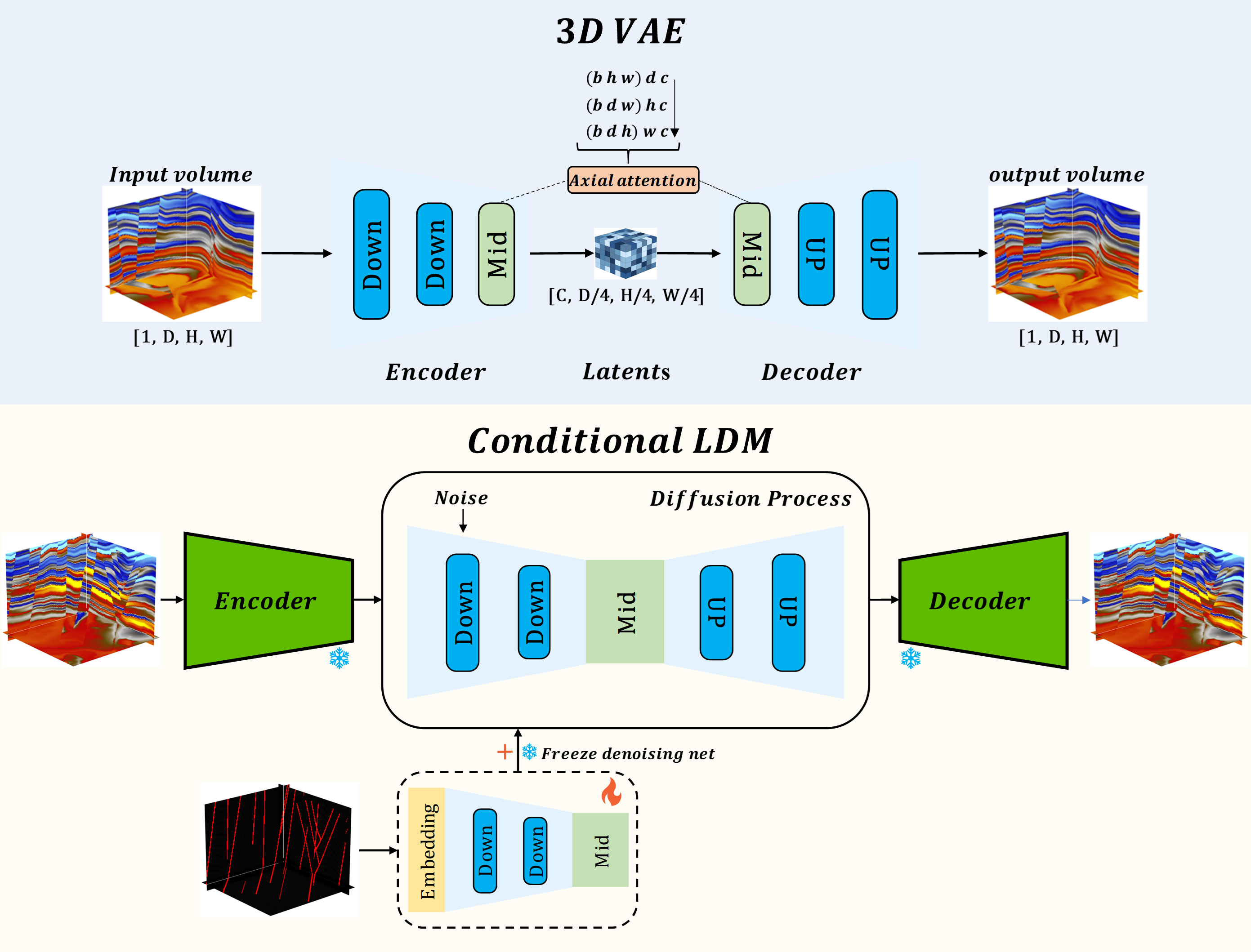
GeoVolDiff: Taming 3D Geological Volumes with Latent Diffusion
Qi Pang, Hongling Chen, Jinghuai Gao.
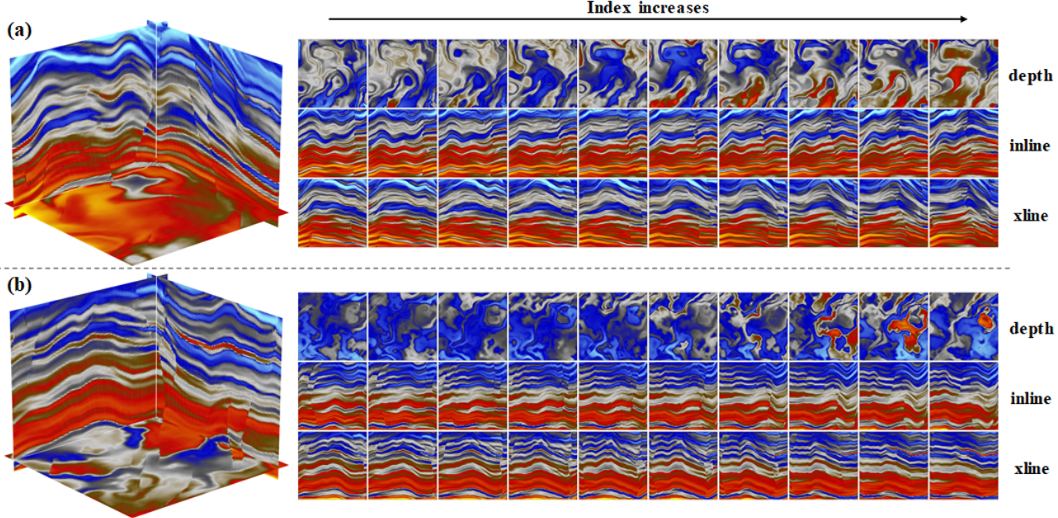
We present GeoVolDiff, a latent diffusion framework for synthesizing realistic 3D geological volumes at scale. The generated geological models can be used to pre-train downstream geophysical learning systems, significantly reducing dependence on expensive labeled field data. Results on seismic impedance inversion show strong transferability from synthetic to real-world datasets.

Previous Research Topics: Seismic Impedance Inversion/Transformer/CNN
My research journey began with seismic impedance inversion, progressing from traditional model-driven approaches to deep learning methods — from CNNs to globally-aware Transformers — which ultimately motivated my shift toward generative modeling.
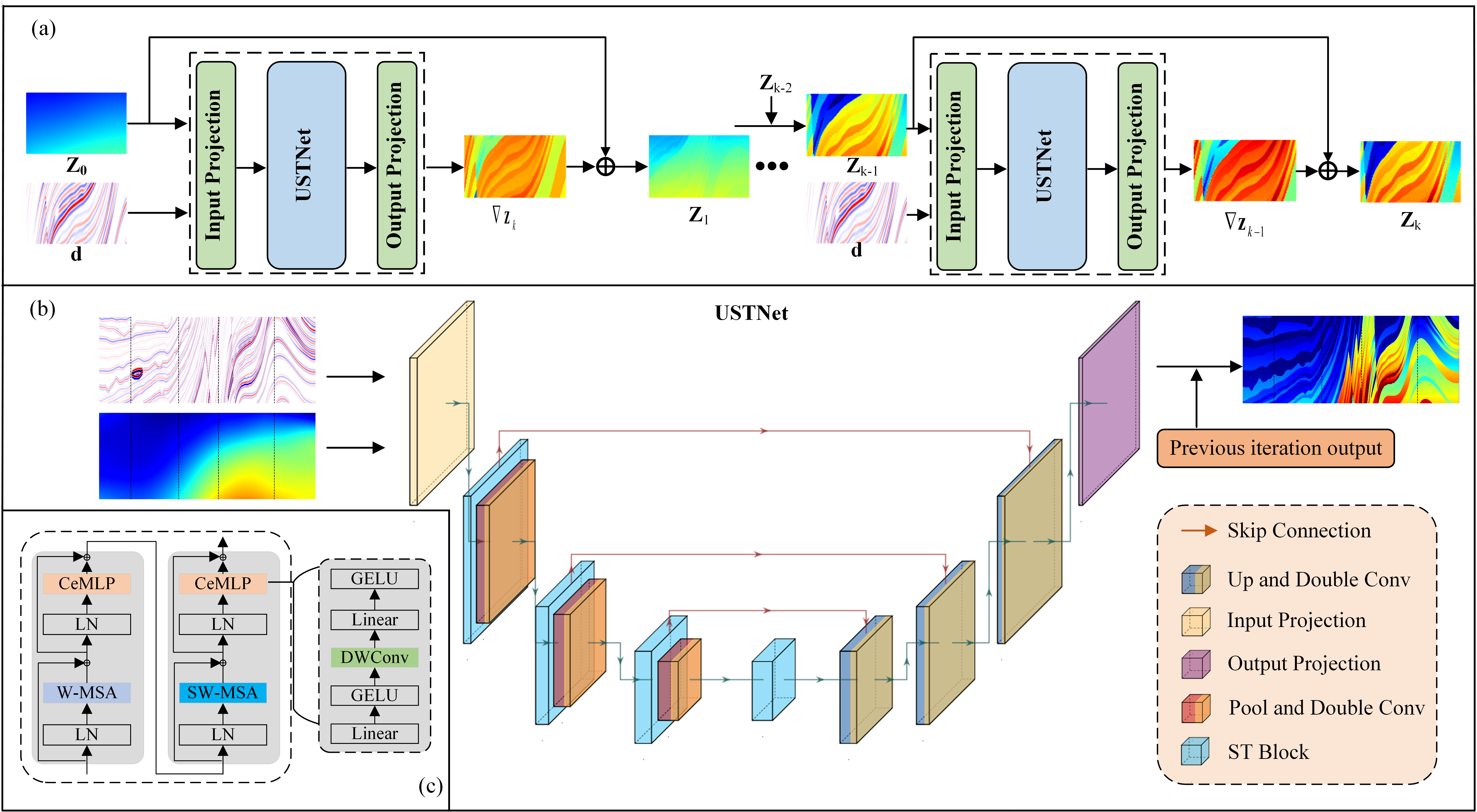
Iterative Gradient Corrected Semi-Supervised Seismic Impedance Inversion via Swin Transformer
Qi Pang, Hongling Chen, Jinghuai Gao, et al.
An iterative gradient correction strategy guides the network to learn update mappings in model space and capture implicit priors, effectively suppressing null-space uncertainty. Combined with Swin Transformer for long-range dependency modeling, achieving high-accuracy seismic impedance inversion.

💻 Research Experience
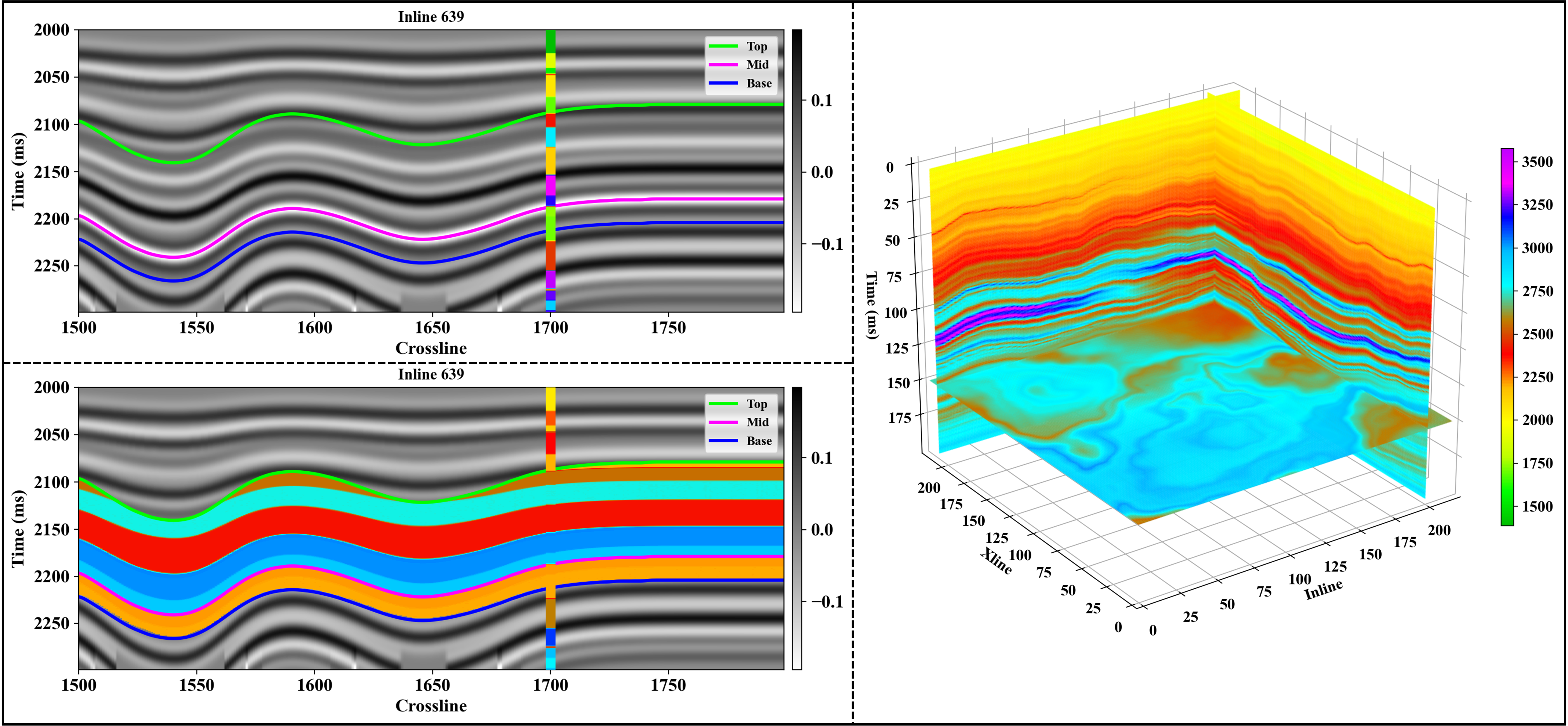
Seisvis - Seismic Data Visualization Library
A simple and easy-to-use Python library for seismic data visualization, designed for geophysicists and seismic data analysts.

📖 Educations


2019.09 - 2023.06
B.Eng., Shenyang Aerospace University
🎮 Hobbies
When I’m not coding or running simulations, I like to relax (or compete!) through games and sports:
- 🪓 Don’t Starve Together – 1000+ hours in the wilderness (and I love eating Meatballs!)
- ⚔️ League of Legends – Chill ARAM grinder / tryhard Top & Jungle main
- 🏓 Table Tennis – Big fan of ping pong! Always up for a quick match
- 🎲 Also enjoy co-op survival, strategy games, and quirky indie titles
Let’s play sometime!
🎮 Steam Friend Code: 1034585311